Free plagiarism checkers are nifty tools for university students in the digital age.
Why? Simply because passing off someone else’s work as your own is a serious offence in the academic community.
This is why students are encouraged to always attribute quotes, paraphrase borrowed ideas, and steer clear of copying entire sentences or paragraphs. Equally important is corroborating sources by cross-checking facts on reliable websites.
Finally, running your work through a free plagiarism checker will determine if it is an original piece worthy of a good grade.
The worst case scenario for international students if you’re caught plagiarising is kissing your student visa goodbye.
What happens when you’re caught plagiarising
The rising prominence of technology in education has its pitfalls — one of them being plagiarism.
Plagiarism itself hasn’t gone away, but the shape of the problem has shifted toward AI-assisted writing. In the UK, nearly 7,000 university students were formally caught using AI to cheat in the 2023–24 academic year alone — a rate of 5.1 cases per 1,000 students, up from 1.6 per 1,000 the year before — more than a threefold jump in 12 months. That count reflects only the students who were caught.
In the US, plagiarism rates have stabilised at a high level rather than declined: around 26.9% of student work is flagged for some form of plagiarism as of 2024, and 39% of undergraduates admit to copying or paraphrasing internet sources without citation.
Australian data tells a more encouraging story on traditional copying — self-reported plagiarism among Australian undergraduates fell from over 80% in 2004 to 57% in 2024 — though 14% of students in the same 2024 survey admitted to unacknowledged AI use.
In another report for the 2020-2021 academic year, more than two dozen students were expelled from Harvard College for what the school described as academic dishonesty.
Of the 138 academic integrity cases Harvard’s Honour Council heard that year, the second most-cited violation was plagiarism, according to the Harvard Crimson. (For those curious, exam cheating topped the list.)
This is made worse by the rise of AI writing tools, such as ChatGPT.
ChatGPT has changed the world. For better or for worse — that’s up for contention.
While handy when used right, AI writing tools have been the headache of many educators and institutions worldwide.
In one survey, 89% of respondents reported that they have used ChatGPT to help with a homework assignment. Of the 89%, 48% admitted to using ChatGPT for an at-home test or quiz, 53% had it write an essay, and 22% had it write an outline for a paper.
The thing is, ChatGPT and other AI writing platforms don’t cut it sometimes. Plagiarism detection tools are quick to pick up on these pieces of work, though even these detection tools have their share of problems, like flagging a completely human-written piece as AI-generated.
Regardless, universities are forced to crack down on students who submit “stolen” work. Students caught plagiarising face real consequences, including a failed grade, academic probation, or being expelled.
For international students, these consequences lead to a much larger repercussion: losing your student visa and, therefore, your right to stay abroad in the country.
It’s no wonder, then, that institutions like the University of Oxford have even introduced special courses to curb this academic crime. Such courses teach students what plagiarism is, how to accurately cite other work in their essays, academic writing skills, and even paraphrasing.
Yet sometimes, even if you don’t mean to copy, the final text ends up too similar to your references.
That’s when a free plagiarism checker comes in handy. Here are some to use on all your assignments to maintain peace of mind — and good grades, of course.
Do plagiarism checkers actually work?
You might be wondering if plagiarism checkers actually work, and the answer is yes, they do, but they’re not perfect.
These checkers can quickly spot copied or closely reworded text from online sources, journals, and other student papers. However, they might miss content from less-known sources.
Can plagiarism checkers detect AI-generated text?
Plagiarism checkers aren’t built to detect AI-generated content, so they don’t always catch it. However, there are tools designed specifically to detect AI language, such as GPTZero, Originality AI, and Scribbr.
Accuracy varies a lot by tool and by writer. Turnitin says its own AI detector has a false-positive rate under 1% for submissions over 300 words, though it is far less reliable on shorter pieces.
What is considered an acceptable similarity score?
An acceptable similarity score may vary depending on your school’s policy, but it is usually between 15 to 25 per cent.
A score creeping past 15% reads as unintentional plagiarism rather than a clean citation, and anything above 25% is generally treated as a signal of deliberate copying, which can trigger a penalty.
A small amount of matching text is fine, especially for quotes and references. What matters is that the main idea and writing are your own.
If your similarity score is high, you should check what parts are highlighted and fix them before submitting.
Why should you use a plagiarism checker?
While it may be time-consuming, especially when you are rushing to complete your assignment before the deadline, you should use a plagiarism checker.
It helps to ensure your work is original and properly referenced, as well as spotting any copied or too-similar information.
The best free plagiarism checkers for students

Plagiarism checkers help students and teachers maintain a high standard of quality in university classes. Source: Ina Fassbender/
It is typically used for English learning and writing, but did you know Grammarly also has a plagiarism checker?
Simply copy a passage or upload a file to check your work against ProQuest databases and 16 billion web pages. You will also gain useful insights into punctuation, vocabulary, and sentence structure to improve your work.
Tap into this free plagiarism checker’s DeepSearch technology for contextual analysis on any subject matter.
Quetext promises fast, accurate scanning while protecting the privacy of its users. Feedback includes colour-grading text based on the level of plagiarism and a comprehensive plagiarism score.
If you’re familiar with Turnitin, you can place your confidence in EasyBib — which claims to use similar technology.
Beyond checking for plagiarism, this software will also provide suggestions to improve your grammar and style.
Bonus: You may submit your paper for a 24-hour in-depth check, which involves detailed feedback from writing experts.
Another plagiarism checker that uses DeepSearch technology is Duplichecker, which offers a basic free version and a multifunctional pro version.
Your results will show percentages of plagiarism, unique, and related-meaning sentences. To begin, copy texts of under 1,000 words or upload your document.
Scribber’s checker, developed in partnership with Turnitin, performs particularly well with sources that are relevant to students, such as journal articles and dissertations.
It thrives in detecting plagiarism in heavily edited texts.
Upload, scan, and compare — that’s what Viper, or scanmyessay.com, helps you with.
The site checks your work for plagiarism against 10 billion sources, which include essays, journals, and numerous other sources published on the internet. Once that’s done, you’ll get a clear and concise plagiarism report, pointing out exactly where your document has matched other existing content.
With its straightforward user interface, Plagiarisma allows you to compare your work to a vast database of sources such as online articles, academic papers, and even books.
A neat thing about this site is that it’ll point out unique sentences, and better yet, it works with over 190 languages too. Talk about accessibility!
Aside from copying and pasting your text into the tool, PapersOwl allows you to upload Word documents too.
And if you’re struggling with your essay writing, PapersOwl has a range of features ready to help you out. This includes a conclusion generator, a paraphrasing tool, an essay rewrite, and more.
Used by students, teachers, researchers, and writers, Copyscape is one of the most used plagiarism checkers.
Copyscape scans the internet for content that matches the text you provide. It compares your content against billions of web pages to find matching or similar content.
While it is free, they also have a premium version, which offers features such as uploading files, running batch searches, and unlimited results.
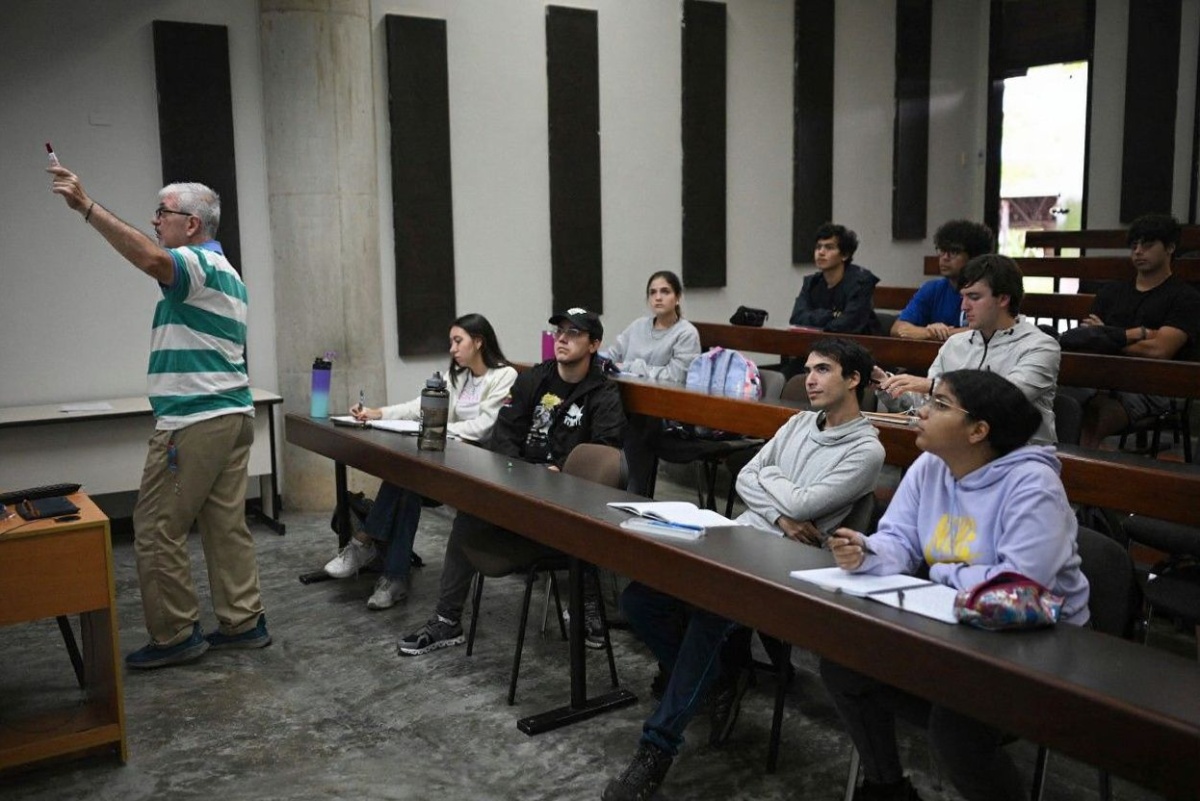
Having a good relationship with your lecturer or mentor can mean a lot more, especially if you need them to help you when you’re falsely accused of using AI-generated writing.
What to do when you’re falsely accused of plagiarising
Ironically, plagiarism detectors aren’t the holy grail of plagiarism detection.
It’s unsurprising to hear that students have been falsely accused of plagiarising, and the problem has moved from isolated stories to a wave of lawsuits and regulatory action through 2025 and 2026.
In February 2026, a court cleared an Adelphi University freshman after ruling that the university’s finding that he had used AI to write an essay was “without valid basis and devoid of reason”; the university had ordered him to attend a plagiarism workshop over the accusation before he successfully challenged it.
A Yale executive MBA student has been in litigation with the university since February 2025 over a similar claim, after the school flagged his final exam using the GPTZero AI detection programme and moved to suspend him.
The detectors themselves have come under regulatory scrutiny, too.
In August 2025, the US Federal Trade Commission finalised an order against the AI-detection company Workado for advertising its tool as “98% accurate,” after finding the tool had only been tested on academic writing and performed close to chance, about 53%
Worse yet, for international students, whose first language is often not English, AI writing and plagiarism detectors pose an even more significant problem.
A 2023 Stanford study found that these detectors were biased against non-native English speakers. An experiment was run with seven AI detectors, and 61% of the writing by a non-native English speaker was flagged.
“The design of many GPT detectors inherently discriminates against non-native authors, particularly those exhibiting restricted linguistic diversity and word choice,” said Weixin Liang, one of the authors of the study, in an interview with The Markup. Liang himself is not a native-English speaker, having learned Cantonese and Mandarin first.
However, there are steps you can take to protect yourself. Here is some advice from people who know what they’re talking about.
“Speak directly to the instructor, in as polite and conciliatory terms as possible,” said Christian Moriarty, a professor of ethics and law at St. Petersburg College in Florida, who studies academic integrity, in an interview with The Washington Post. “Escalating makes everybody go on the defensive.”
One writer, Lizzie Wolkovich, had her submission for a scientific journal accused of being “obviously ChatGPT.” Since then, she said that her plan was to use Git and GitHub for all their writing “from day one, and to document changes every day.”
It’s similar to what other students are doing, which is tracking their hard work through Google Docs or Microsoft Word through the version history feature.
“It’s not an ironclad system, but it has given me some peace of mind — not to mention, a paper trail that clearly shows a manuscript written slowly and painstakingly, and without ChatGPT,” wrote Wolkovich in a Nature article.
High school senior Lucy Goetz, whose original essay was flagged as AI-generated, offers her plain advice simply: “There is no way to prove that you didn’t cheat unless your teacher knows your writing style or trusts you as a student.”
In Goetz’s case, her good relationships with her teachers helped her combat the false accusation, and if that’s not a case study for you to learn from, now’s the time.
Disclaimer: This article was last updated on August 7, 2026.