Speaking at The PIE Live Asia Pacific, sector leaders from across universities and institutes of technology and national bodies described a recovery that is smaller in scale than neighbouring Australia’s, but potentially more sustainable.
Marie Clark, director of insights and performance at Education New Zealand (ENZ), reminded delegates that public backing for the sector remains strong.
Referring to ENZ’s social licence research, she noted that last year 77% of New Zealanders see the benefits of international students, and 77% would like to see the same number, or more, international students coming to New Zealand.
Those numbers matter, she suggested, alongside growth indicators and student experience data, as New Zealand works through “what sort of growth as a country we should be aiming for”
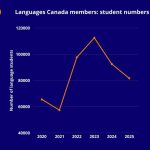
New Zealand’s reset is now visible in the numbers. Enrolments rebounded in 2025, with universities and schools together accounting for around 65% of total volume.
Where Australia experienced a rapid post‑border reopening surge, New Zealand’s border stayed closed longer and reopened later, leading to a slower rebuild.
“At Victoria University, we only just recovered our international student numbers this semester – we’re talking about recovery literally last week,” said Amy Rutherford, director international at Victoria University of Wellington.
“That slower recovery, though, I think, has meant that New Zealand doesn’t have the same headwinds that perhaps Australia is facing at the moment in terms of the massive, huge recovery that you had much earlier, which I think perhaps impacted social licence within Australia in a way that we haven’t seen in New Zealand.”
At the same time, structural pressures at home are real, she explained, noting that “government has been quite clear that there will be no more funding for universities”.
“So universities have to seek sources of funding, and international education is a fundamental part of that,” she continued.
Operationally, institutions are dealing with a spike in interest.
“We do have a lot of demand,” she said. “At the moment we are waterboarded with applications.”
At her institution, application volumes are now “about five times what they were two years ago”, but conversion has fallen. Immigration New Zealand used to see roughly half of offer‑holders progress to a visa application, now it is closer to 15-20%.
Dani Mao, employability manager at Otago Polytechnic Auckland International Campus, brought the on‑the‑ground perspective from working daily with international students.
Prospective students – and even those already admitted – are asking very specific, very relevant questions, she explained.
“They’re asking us to list the industry partners we work with, the companies we send interns to, and the outcome of our graduates… how long on average [until] international students are employed, and they even ask about the [salary] range.”
“Some of this information we don’t actually capture well enough, because a lot of graduate outcomes data is based on voluntary surveys,” said Mao.
“We would love to have more information from government and from our own institutional data to be able to give students more information – but the data is hard to crunch.”
Clark agreed that better graduate tracking is critical, particularly as more international students now stay in New Zealand after study.
“We know we can’t track students very well, apart from institutional surveys,” she said. “But increasingly, students are staying on shore in New Zealand, going into work. So we can, and we will be able to get something out of our government data on what’s happening with their graduates when they transfer into the workforce.”
As Mao put it, the goal is “stronger student outcomes and the outcomes properly tracked”.