Most people in tech leadership have been in this position. You understand technology and know what the organisation should do next. But getting people to agree and take action is often much harder. That’s where many great ideas lose momentum — not because they’re wrong, but because they’re tough to turn into action.
The ideas that live led by people who know how to move them. People who can take a strong idea, build a case around it, and get the company to act. That’s a skill, and it’s one most technical people are never taught.
Combining technical expertise with the ability to explain its value in a way that inspires confidence and drives decisions – this is the skillset that will shape the future. And those abilities can be developed in the right environment, with the right guidance, as the following three universities are accomplishing.
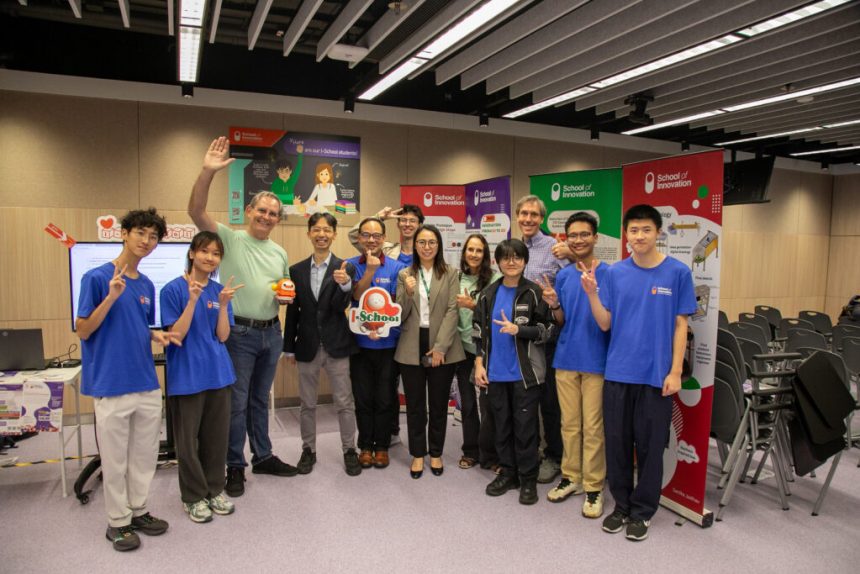
The School of Innovation at The University of Hong Kong nurtures innovators ready to solve the world’s biggest challenges. Source: The University of Hong Kong
The University of Hong Kong
Technology alone doesn’t make a difference — it’s the people who know how to use it. That’s why The University of Hong Kong created its School of Innovation (I-School): to equip students with strong technical skills and an innovative mindset, empowering them to turn ideas into real solutions that make an impact in Hong Kong and beyond.
The I-School’s Master of Science in Innovation and Technology (MSc(I&T)) is a career accelerator for STEM graduates ready to move beyond technical execution and into leadership. From day one, you work on real problems with real teams. You’ll learn how to spot an innovation opportunity inside a complex organisation, bring a technology idea to life, and do it all while working across different disciplines and cultures.
A key part of the journey is AI. It runs through the entire curriculum, from research and design to prototyping and decision-making. So, by the time you graduate, you won’t just use AI. You’ll lead with it. You’ll also learn to critically evaluate what AI produces, because knowing when to trust a model and when to question it is what sets strong innovation leaders apart.
Equally important is the location. Hong Kong is home to world-class institutions and a mature financial ecosystem, from the Hong Kong Stock Exchange to digital banks like ZA Bank and WeLab. Cross the border into Shenzhen, and you’ll be in one of the fastest-moving tech and manufacturing hubs on the planet, where companies like BYD and Huawei are headquartered.
Together, the Greater Bay Area will give you a front-row seat, and a direct pathway, to where technology gets built and scaled.
Applications open from August 2026, with intakes in January and September 2027 for the inaugural cohort graduating in June 2028. Apply now to join the pioneers and define the standard.
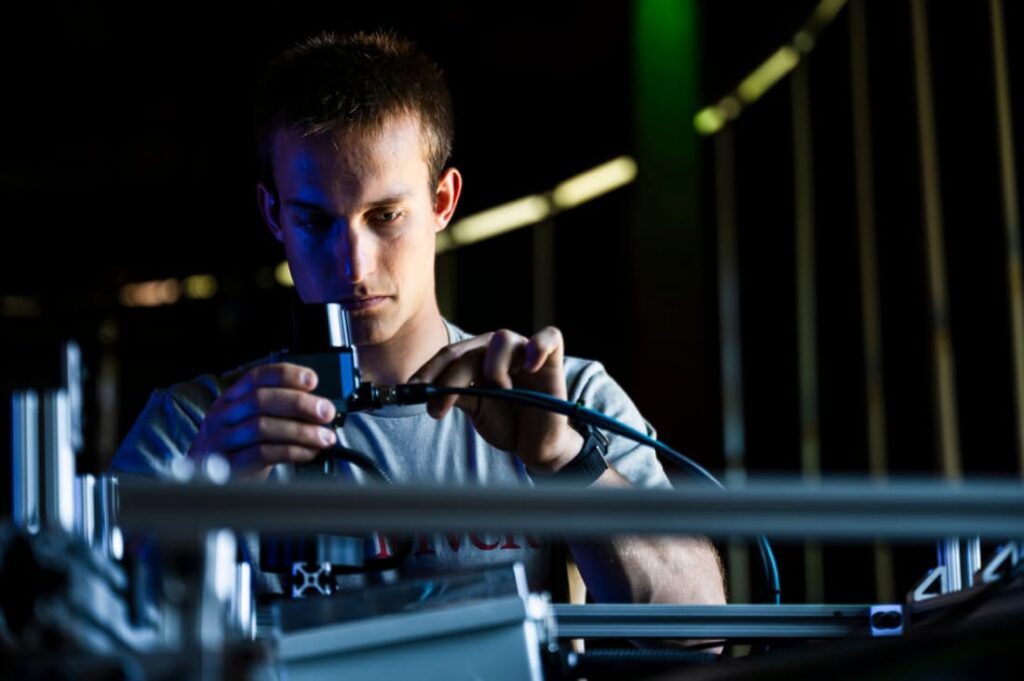
Northeastern University’s Centre for Technology Management and Digital Leadership offers a dynamic master’s programme with hands-on projects and global networking opportunities. Source: Northeastern University
Northeastern University
Understanding technology is one thing. Leading an organisation through technological change is another. Many professionals have technical expertise but struggle to turn it into a strategic impact. Northeastern University‘s Centre for Technology Management and Digital Leadership has designed its MS in Strategic Technology Leadership programme to solve just this. Aimed at managers and directors in technology-driven organisations, the programme prepares you for leadership roles where business strategy and technology intersect.
The programme covers five key areas: strategy, data, leadership, finance, and operations. Every course centres on actual business decisions. In Competing in Innovation-Driven Markets, for example, you’ll work through how technological change creates new markets and business models — and how to position your organisation to compete before the window closes.
No course is 100% based on theory. The Integrated and Applied Technology Leadership Project runs throughout the programme and is built around a challenge within your own organisation. Along the way, you’ll receive guidance from faculty, an industry mentor, and a company representative, helping you develop practical solutions while strengthening your leadership skills.
To round out the experience, you’ll take part in three in-person residencies in Boston and London. These sessions allow you to connect with peers and industry leaders — you can exchange ideas and gain first-hand insight into how innovation is approached in different parts of the world.
Your learning will be further enriched by Northeastern’s location in Boston, one of the world’s leading innovation hubs. There’s nothing like being surrounded by institutions like MIT and Harvard, along with more than 1,000 biotech and technology companies working across various industries. Here, ideas turn into tangible business outcomes.
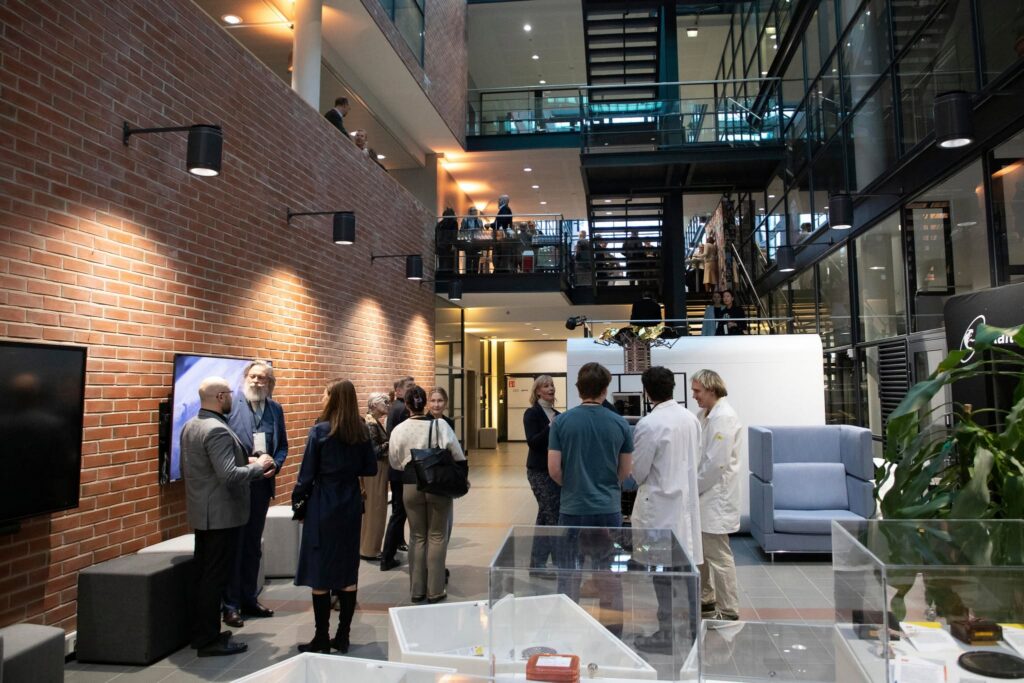
Aalto University’s MS in Industrial Engineering and Management prepares graduates for expert and leadership roles across startups, multinational companies, public and non-profit organisations. Source: Aalto University
Aalto University
Ranked Finland’s #1 university and 114th globally in the 2026 QS World University Rankings, Aalto University is known for bringing together science, technology, business, and design. That way of thinking shapes everything at the School of Science, including the Master of Science in Industrial Engineering and Management (IEM).
The two-year programme will prepare you to lead technology-based businesses by combining industrial engineering with strategy, leadership, and entrepreneurship. You’ll learn how engineering and business work together, from understanding how technical decisions affect business outcomes to knowing how strategy influences product development.
To get there, you’ll first need to choose from four specialisations: Organisation Design and Leadership, Operations Management, Product and Innovation Management, and Strategy. Each one focuses on real business challenges, such as managing change and turning new technologies into opportunities. Whichever track you choose, you’ll experience hands-on learning from the start, since many courses include business projects with real companies. This will give you industry exposure and the chance to build skills that employers value.
It’s an approach that has produced real results, too. Some of Europe’s most successful startups, including Supercell, were co-founded by IEM alumni, and students are actively involved in organising Slush, one of the world’s largest entrepreneurship events. And the campus puts you right in the middle of that energy — less than 15 minutes from downtown Helsinki, Aalto’s Otaniemi campus is home to A Grid, one of Northern Europe’s largest centres for growth companies, housing nearly 150 startups and partners.
*Some of the institutions featured in this article are commercial partners of Study International