
Asian Stock Markets Plunge as US Tech Sell-Off Sparks Fears Over AI Investment Boom

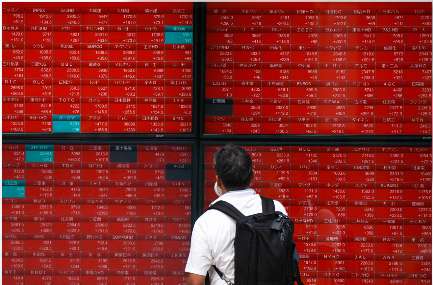
Asian stock markets tumbled on Friday, November 6, 2026, following a major sell-off on Wall Street as growing political uncertainty in the United States raised concerns about the future of artificial intelligence (AI) investment.
Asian financial markets experienced sharp losses on Friday as fears surrounding the sustainability of the global artificial intelligence boom triggered a widespread sell-off in technology stocks.
South Korea’s benchmark KOSPI index plunged more than 8% shortly after opening, prompting a temporary trading halt. Japan’s Nikkei 225 dropped approximately 6%, while Taiwan’s Taiex index declined around 8% during morning trading.


The sharp declines followed a technology-led downturn in the United States, where investors grew increasingly concerned that political developments could slow the massive investments driving the AI industry.
AI Investment Uncertainty Triggers Global Market Sell-Off
The recent stock market decline highlights growing concerns about the future of artificial intelligence infrastructure spending, which has become one of the biggest drivers of global financial markets.
Major US technology companies, including Meta, Amazon and Google, have committed enormous amounts of capital to developing AI infrastructure, particularly large-scale data centres, advanced computing systems and semiconductor technology.
These companies, commonly known as hyperscalers, are investing heavily in infrastructure to support the rapidly expanding demand for AI-powered services.
The spending has created significant opportunities for Asian technology manufacturers, particularly semiconductor producers and electronics suppliers that provide essential components for AI data centres.
However, investors are increasingly questioning whether these massive investments will generate sufficient returns in the long term.
US Political Developments Add Pressure on AI Industry
Political developments in Washington have added another layer of uncertainty to an already volatile technology sector.
Concerns surrounding the environmental impact, electricity consumption, water requirements and community effects of large data centres have turned AI infrastructure expansion into an increasingly important political issue.
Following the US midterm elections, Democrats secured control of both chambers of Congress, according to the reported election results, raising concerns among investors that new political pressure could slow or restrict certain AI infrastructure projects.
Potential regulatory obstacles, environmental restrictions and delays in approving new data centres could affect the investment plans of major technology companies.
For investors, the concern is not simply about artificial intelligence itself but whether the extraordinary pace of spending behind the technology can continue. For investors, the concern is not simply about artificial intelligence itself but whether the extraordinary pace of spending behind the technology can continue.
Why Asian Markets Are Particularly Vulnerable
Asian markets are closely connected to the global technology supply chain. Countries such as South Korea, Japan and Taiwan play critical roles in producing semiconductors, electronic components and advanced manufacturing equipment.
As demand for AI computing infrastructure has increased, technology companies across the region have benefited from rising orders and strong investor interest.
However, this dependence also makes Asian markets vulnerable whenever expectations surrounding AI investment weaken.
A slowdown in spending by major US technology companies could affect semiconductor manufacturers, electronics suppliers and other businesses that depend on continued expansion of AI infrastructure.
The latest market movements demonstrate how quickly concerns in the US technology sector can spread across international financial markets.
Investors Question Whether the AI Boom Can Last
The recent volatility also reflects a broader debate about the sustainability of the artificial intelligence investment boom.
While AI technology continues to attract significant corporate investment, questions remain about the profitability of data centres, the cost of advanced computing infrastructure and the time required to generate meaningful returns.
Investors are increasingly examining whether current company valuations accurately reflect future earnings potential or whether markets have become overly optimistic about AI-driven growth.
According to research from Columbia Business School cited in the original report, AI-related infrastructure investment accounted for nearly all observed US GDP growth by the end of last year, highlighting the technology sector’s growing economic importance.
If spending slows significantly, the consequences could extend beyond technology stocks, potentially affecting broader economic growth and international financial markets.
What Happens Next?
Market participants will closely monitor developments in US technology investment, political decisions surrounding data centre expansion and the financial performance of major AI companies.
The direction of semiconductor demand and future capital expenditure plans from major hyperscalers could also influence investor sentiment in the coming weeks.
For now, Friday’s sharp declines serve as a reminder that even the strongest market rallies can face significant pressure when investors begin questioning the sustainability of their underlying growth drivers.
The bigger question facing global markets is whether the AI investment boom is entering a temporary correction or approaching a more fundamental reassessment of its long-term economic value.
Postofday.com will continue to follow developments in global stock markets, artificial intelligence investment and the technology sector.
