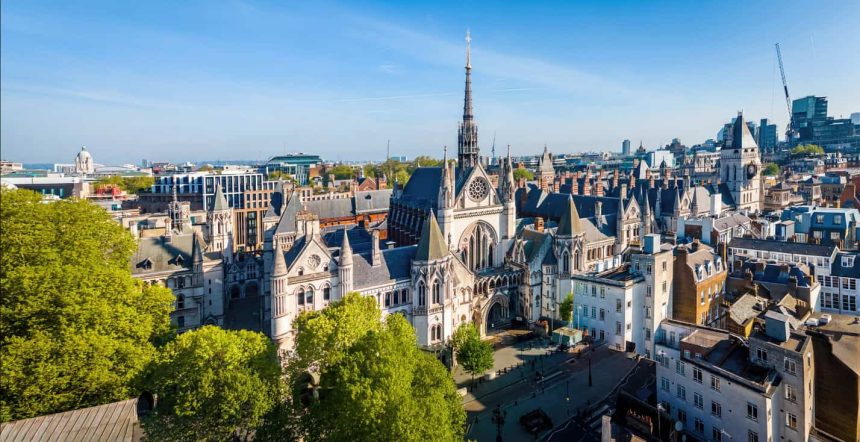
One of the claims heard at London’s Royal Courts of Justice was brought by three female Sudanese students seeking to overturn the Home Secretary Shabana Mahmood’s March 2026 ban cracking down on alleged abuse of the visa system.
Represented by Duncan Lewis law firm, two of the women are doctors and one is a pharmacist, holding master’s offers from Oxford University and University College London (UCL).
“Our clients argued before the High Court last week that the Home Secretary had selected Sudan for the imposition of a blanket ban on an arbitrary basis, without any evidence of visa abuse committed by Sudanese nationals,” said Duncan Lewis Solicitor Manini Menon.
They argued that had the Home Secretary assessed the facts of their cases, it would have been plain to her that they each intended to travel to the UK solely for the purpose of study and had no intention whatsoever to remain in the UK after graduation.
What’s more, the case alleged the government failed to consider other alternatives to the blanket ban and in implementing the policy, had unfairly restricted the department’s ability to make decisions on a case-by-case basis.
Despite the policy’s stated purpose of addressing “visa abuse” of students claiming asylum, the claimants said the Home Office failed to investigate whether any such abuse occurred among nationals of the targeted countries, with Mahmood having admitted she did not conduct such inquiries.
Instead, she now claims the visa brake was never targeted at “visa abuse” at all but rather that it sought to prevent all in-country asylum claims by affected nationals – a position that lawyers say is inconsistent with the government’s public statements.
On announcing the policy, the Home Secretary said: “Britain will always provide refuge to people fleeing war and persecution, but our visa system must not be abused.”
Our clients are all medical professionals working on issues of public health and sexual and reproductive rights… all of which HM Government has recognised in its foreign policy as being key UK priorities in Sudan
Manini Menon, Duncan Lewis
The Home Office stated asylum applications from the four targeted countries increased by more than 470% in four years, a figure the claimants argued was arbitrarily calculated and bears no relationship to the facts.
The figure drew criticism at the time, with experts calling it a “distortion” given that only 120 Sudanese students applied for asylum in the year up to September, out of a total of more than 110,000 asylum claims to the UK.
What’s more, while the four impacted countries have seen large enrolment percentage increases, none of them are near the top of the list for the total number of students claiming asylum.
Lawyers for the students called them “talented, high-achieving women” who have secured admission to some of the top universities in the world.
“It is disappointing that the Home Secretary has decided that they should be deprived of the opportunity to take up their offers of study solely on account of their nationality, without any assessment of the individual facts of their cases,” said Menon.
“This is particularly so in circumstances where our clients are all medical professionals working on issues of public health and sexual and reproductive rights (including eradication of the practice of FGM), all of which HM Government has recognised in its foreign policy as being key UK priorities in Sudan,” she highlighted.
Menon said the case had been “hugely expedited” due to the incoming start of the academic year, with a judgement expected next week. It was heard alongside another legal challenge brought by a further four students from the targeted countries.
The PIE Newsunderstands Oxford University has agreed to keep offers and scholarships open for the claimants until this August 31.
Meanwhile, University College London (UCL) has agreed to defer its offer by one year if the claimants are successful, to give the affected student time to raise the funds for her studies, following the sudden termination Chevening Scholarships for impacted individuals after the policy’s implementation in March 2026.
In a funding campaign for the legal costs, one of the students said she understood the UK government’s concern that visa routes should not be abused, but that her circumstances demonstrate the flawed nature of blanket policies.
“The focus of my career is supporting health systems in low-income and conflict-affected settings, particularly in Sudan and the surrounding region,” she said.
“I have travelled to the UK and to Europe on a number of occasions since the outbreak of war in Sudan – if I had any intention of claiming asylum, I could have done so then, without going to the trouble of applying to (and securing admission to) one of the most prestigious universities in the world.”
“Yet the effect of the Home Secretary’s policy is to treat me and hundreds of others like me as ’abusive’ applicants,” she wrote.