Are you about to study abroad? If you’re all set to embark on a new chapter of your student journey, here’s an essential question: is health insurance for students enough — and do you know exactly what it covers?
The gap between “I’m covered” and “I’m covered for this” is where many international students can get caught out.
According to Allianz Partners Australia’s 2025 State of Student Healthcare Report, researched by QS among students from 88 countries, 82% of students expressed major concerns about healthcare affordability, while only 17% strongly agreed that they understood the healthcare system in the country where they were studying.
At the same time, the cost of mandatory healthcare coverage is rising. Ontario’s University Health Insurance Plan (UHIP) increased by almost 20% on September 1, 2026, rising from C$792 (US$569.43) to C$948 (US$681.59) a year for a single student across 22 participating universities.
Health insurance is essential when studying abroad, but many students don’t realise how limited their coverage can be.
Medical treatment can be extremely expensive, particularly in countries where healthcare costs are high. Many uninsured students don’t realise this — and it has led to them being forced to cover excessive medical bills. The US government’s Healthcare.gov guidance, for example, estimates that a broken leg can cost up to US$7,500, while an average three-day hospital stay can cost around US$30,000.
While getting health insurance is typically part of your visa requirements, should you get additional coverage while abroad?
Many may not consider doing so for several reasons: to save money, they deem it unnecessary, or their universities don’t require it, to name a few.
TL;DR? Here’s the summary:
- This article features six popular study destinations: the UK, US, Canada, Singapore, Hong Kong and Finland, and explores what health insurance covers in each.
- Health insurance is essential for international students, but mandatory coverage may not cover everything they need.
- Additional private health insurance may be worth considering for broader medical coverage and access to private healthcare.
F1 students in the US don’t need to obtain health insurance. Source: Justin Sullivan/Getty Images North America/Getty Images via AFP
Additional health insurance for students: Is it really necessary?
Here’s one reason you should get health insurance: medical security. It’s hard to predict what happens abroad — you may get injured and require medical attention.
That’s not all — most countries require their international students to have health insurance for entry into the country. This includes the UK, Canada, Australia, South Africa, China, Japan and more.
Having said that, mandatory health insurance may not always be sufficient as it typically offers limited medical coverage, depending on the health insurance plan obtained.
The reason is structural: mandatory coverage is often designed to ensure students can access essential healthcare without leaving hospitals, doctors or public systems with unpaid bills. It isn’t necessarily designed to provide a complete healthcare package.
So, whether you’re covered through a national healthcare scheme or automatically enrolled in a university plan, read the policy carefully to understand what it actually covers — and what it doesn’t.
In other words, having health insurance is only the first step. Knowing what your policy leaves out can be just as important.

The cost of healthcare can be high abroad, making adequate health insurance an important consideration for students. Source: Pexels
Here’s how that plays out in six popular destinations
United Kingdom
Courses lasting more than six months: You must pay the Immigration Health Surcharge at £776 (US$1,046.68) per year, upfront, for the full length of your visa. For a one-year master’s, this typically works out to £1,164 (US$1,570.02), as the visa usually extends four months beyond the course. You must pay the surcharge even if you already have private health insurance.
The surcharge gives you access to the National Health Service (NHS) on broadly the same basis as a UK resident. However, it does not cover prescriptions (£9.90 (US$13.35) per item in England), dental treatment (£27.90 (US$37.63) to £332.10 (US$447.94) per course from April 2026), or eye tests.
The UK’s NHS cover, for example, only offers free-of-charge services for the following:
- Consulting your GP
- Hospital treatment in accident or emergency services
- Hospital treatment recommended by your GP
- Maternity services
- Contraceptive services
Courses lasting less than six months: You generally have no NHS entitlement and will need to pay for healthcare yourself. UK Council for International Student Affairs (UKCISA) recommends that students on short-term courses take out private health insurance for the entire duration of their stay.
United States
There is no federal health insurance requirement for F-1 students. Instead, requirements are set by individual universities, and they can be strict: the University of Richmond requires students to have approved health insurance before they can register for courses, meaning failure to meet the requirement could affect their ability to maintain their student status.
Budget roughly US$1,800 to US$4,400 a year. Penn State charges undergraduates US$4,365 for the 2026–27 academic year, while Purdue Fort Wayne charges US$1,776.40. Students are typically auto-enrolled and billed for the university plan unless they obtain a waiver by demonstrating that an approved private policy meets the university’s requirements.
What does it cover? Coverage varies by university plan, but typically includes doctor visits, hospital and emergency care, and prescription medications, subject to the policy’s terms, deductibles, and limits. Coverage can also change from one academic year to the next.
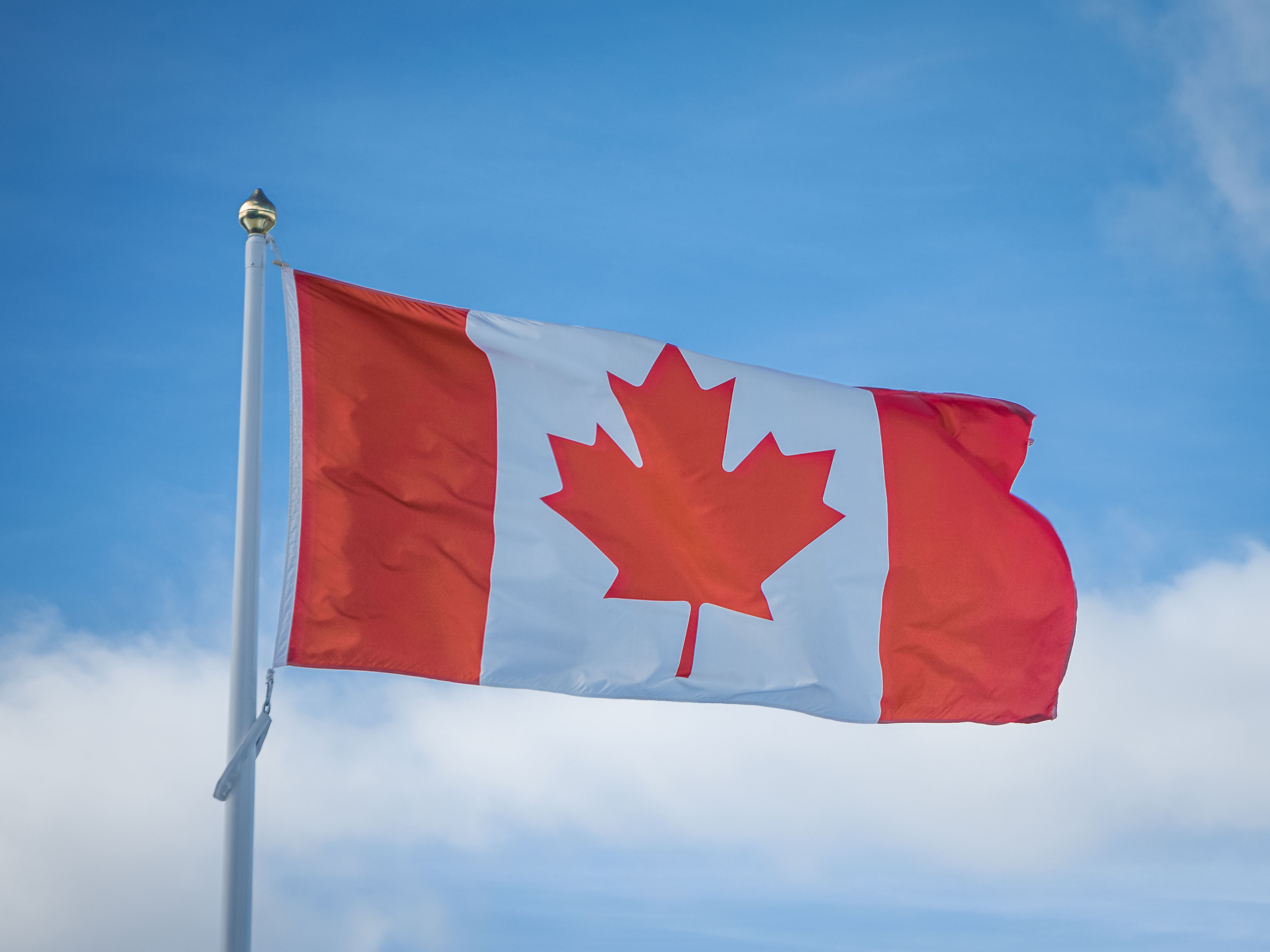
International students in Canada should check their province’s healthcare rules, as coverage and costs vary across the country. Source: Pexels
Canada
The province decides, not the country. Alberta covers international students at no cost, but only if they have a study permit valid for 12 months and intend to stay that long.
Saskatchewan issues health cards to full-time students with a valid study permit. In British Columbia, study permit holders pay a $75-a-month health fee and must wait out the remainder of their arrival month plus two full calendar months before Medical Services Plan (MSP) coverage begins, so you will need private coverage for that gap.
Ontario excludes international students from Ontario Health Insurance Plan (OHIP) altogether, so UHIP applies at C$948 (US$681.59) a year from September 2026, billed automatically to your student account.
Plans generally cover essential medical services such as doctor visits, hospital stays, laboratory and diagnostic tests, and ambulance services, although the exact benefits and exclusions vary by province and plan.
Singapore
Health insurance is compulsory for international students and is bundled into miscellaneous fees at Nanyang Technological University (NTU), and other public universities. There is no separate policy to purchase and no option to opt out.
However, the coverage is not comprehensive. The NUS Hospital and Surgical Insurance Plan for 1 August 2026 to 31 July 2027 is capped at S$30,000 (23,584.91) per policy year and covers only 50% of eligible expenses at private hospitals for international students.
A second compulsory scheme, NUS Outpatient Specialist Insurance, reimburses specialist consultations, scans and physiotherapy up to S$1,000 (US$786.16) per year. However, treatment must be based on a referral and received at restructured hospital clinics or the campus health centre, while private specialist care is again covered at only 50%.
Both schemes exclude dental treatment, eye examinations and glasses. They also operate on a reimbursement basis, meaning students generally pay the bill upfront before claiming eligible expenses. You should check your own university’s insurance factsheets, as coverage, limits and conditions vary across institutions.

Although health insurance is not mandatory, some Hong Kong institutions may require students to have medical, accident, hospitalisation and evacuation coverage. Source: Pexels
Hong Kong
Hong Kong immigration rules do not set a minimum level of medical insurance coverage, so universities determine their own requirements. The Hong Kong University of Science and Technology (HKUST), for example, makes medical insurance compulsory for all full-time non-local degree students.
As an international student, the key thing for you to know is whether you have a Hong Kong Identity Card (HKID). With an HKID, you are generally classified as an “eligible person” and can access subsidised public healthcare. From 1 January 2026, you pay HK$400 (US$51) per A&E visit and HK$300 (US$38.25) per inpatient day, with public medical charges capped at HK$10,000 (US$1,274.90) a year.
Without an HKID, your costs can be significantly higher — HK$2,100 (US$267.73) per A&E visit and HK$7,400 (US$943.43) per inpatient day. This is why HKU recommends private medical insurance, particularly during your first month in Hong Kong.
Finland
Health insurance is a requirement for your residence permit. Migri requires students studying for less than two years to have insurance covering at least €120,000 (US$138,492.97), while those studying for two years or more need at least €40,000 (US$46,164.32) in coverage. The policy must have an excess of no more than €300 (US$346.23) and remain valid throughout your stay. Travel insurance limited to 90 days per trip will not be accepted.
If you stay for two years or more, you can register a municipality of residence after arriving, giving you access to Finland’s public healthcare system. All degree students must also pay Kela’s €35.35 (US$40.80)-per-term student healthcare fee for access to student health services.
The fee provides access to Finnish Student Health Service (YTHS) clinics, including general, mental and dental health services, although some services may have separate charges.
Health insurance for students: Isn’t my existing insurance policy back home enough?
Unfortunately, most local insurance policies only grant you benefits within your home country. This means that whatever happens to you outside of your home country may not be covered by your existing insurance provider.
It’s best to check with your current insurance provider if your policy covers you when you study abroad. Many insurance providers — both local and international — offer health insurance policies for students at discounted prices.
 NYU graduate student Reginald Williams works on his laptop on the recently constructed pedestrian plaza with the Empire State Building behind him.
Should I get additional healthcare coverage?
Now Health recommends international students in the UK sign up for private health insurance, even if they are already covered by NHS.
This is because additional cover lets you receive the right level of care during your stay. It provides access to private healthcare providers and covers specialist treatment and dental care.
Additionally, in some countries, their public healthcare system may not be the best — some may have long waiting times, and the quality of their healthcare and facilities may or may not be advanced.
Before signing up for private health insurance, check what your current plan covers. This way, you’ll have a clear idea of the coverage you’ll need for your private insurance policy.
Ultimately, health insurance for students is important. Having one with good coverage will give you a peace of mind. Most importantly, it may seem that you’re burning a hole in your wallet right, but what many international students have learned the hard way is that it’s better to be safe than sorry!