
Madhav Kumar Nepal Land Scandal: 5 Key Questions Explained
Understand the public land corruption case involving former PM Madhav Kumar Nepal, the CIAA allegations, NPR 734.96 million claimed loss and what happens next.

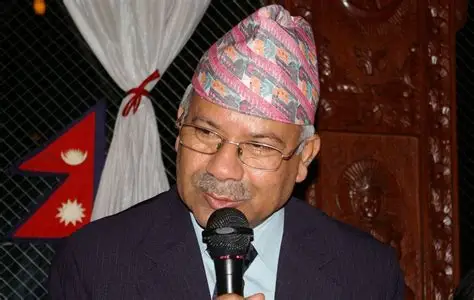
Kathmandu, Nepal – A major corruption case involving former Prime Minister Madhav Kumar Nepal has drawn public attention after the Commission for the Investigation of Abuse of Authority (CIAA) filed a case at Nepal’s Special Court over the alleged illegal exchange of public land in Morang district.
The case involves several former government officials, political figures, company representatives and other individuals accused of participating in decisions that allegedly caused significant financial losses to the state.
According to the CIAA, land originally granted to a private company under special conditions for industrial purposes was later exchanged through a controversial government approval process, despite an earlier decision to confiscate it.
The commission claims that the transaction resulted in substantial losses to public property.
But what exactly happened? Why has the former prime minister been named in the case? And what happens next?
Here are five key questions that explain the controversy.
1. How did the public land controversy begin?
The origins of the case date back to 1975, when the government granted Rizal Canning and Company Pvt. Ltd. special permission to hold land beyond the legally prescribed ownership limit.
The exemption was granted to support the operation of a fruit-processing industry in Sunsari and Morang districts.
However, the permission came with specific conditions. The land was supposed to be used exclusively for the company’s designated industrial purpose.
According to the investigation, the company failed to comply with those conditions. As a result, the government decided to confiscate the land on April 5, 1992.
The controversy emerged years later when the land’s ownership and exchange arrangements were reconsidered.
The CIAA alleges that government decisions made in 2009 opened the way for the exchange of land that should have remained under government ownership.
2. Why has former Prime Minister Madhav Kumar Nepal been named in the case?
The CIAA has included former Prime Minister Madhav Kumar Nepal because the controversial land-exchange proposal received approval during his government’s tenure in 2009.
The commission has particularly questioned the Cabinet decision of December 2, 2009, along with the subsequent decision-making process through the Cabinet’s Social Committee.
Former minister Minendra Rijal and several other officials involved in the administrative and approval process have also been named in the case.
According to the CIAA, the authorities involved allegedly approved the land exchange despite circumstances that required the property to be confiscated by the government.
The investigation also examines the roles of government employees, company representatives and other individuals who allegedly helped move the proposal through different government offices.
It is important to understand that being named in a corruption case does not automatically establish guilt. The allegations must be examined by the court, and every defendant has the right to defend themselves.
3. How much financial loss does the CIAA claim the government suffered?
One of the most significant aspects of the case is the financial valuation of the land involved in the disputed transaction.
According to the CIAA’s charge sheet, the land in question was located in the former Ward No. 3 of Biratnagar Sub-Metropolitan City, covering two land parcels identified as plot numbers 48 and 71.
The combined area is reported to be approximately 4 bighas, 5 katthas and 9 dhurs.
The commission’s investigation highlights the following financial details:
- The company reportedly purchased land in Banigama for approximately NPR 1.285 million.
- The more valuable land in Biratnagar was reportedly sold for approximately NPR 83.86 million.
- The CIAA has calculated the alleged loss to public property at approximately NPR 734.96 million.
The commission argues that the exchange involved valuable urban land being transferred through an arrangement that disadvantaged the government.
The claimed amount represents the CIAA’s assessment of the financial damage. The final legal determination will depend on the evidence and findings of the Special Court.
4. What happens next in the court proceedings?
With the CIAA filing its charge sheet at the Special Court, the case now enters the judicial process.
The proceedings generally involve several stages:
Step 1: Court notices
The court issues legal notices or summons requiring the defendants to appear and respond to the charges.
Step 2: Statements from defendants
Those appearing before the court are given an opportunity to provide their statements and respond to the allegations.
Step 3: Detention and bail hearings
The court conducts hearings to determine whether the accused should be held in custody, released on bail or allowed to remain on ordinary court attendance, depending on the applicable law and circumstances.
Step 4: Examination of evidence
The court examines documents, official decisions, financial records, witness statements and other evidence submitted by both sides.
Step 5: Final judgment
After considering the evidence and legal arguments, the court delivers its verdict.
If the charges are proven, the court may impose penalties and order recovery of the amount established as financial loss, in accordance with applicable law.
5. Why was the land originally granted, and what made the transaction controversial?
The land was originally granted to Rizal Canning and Company for operating a fruit-processing industry.
A notice published in the Nepal Gazette on June 2, 1975, allowed the company to retain land beyond the normal ownership ceiling in connection with its industrial activities.
However, the exemption was conditional. The company was expected to maintain the industrial operation for which the additional landholding permission had been granted.
The government later decided to confiscate the land on April 5, 1992, after concerns emerged over the company’s failure to fulfil the required conditions.
Another important development occurred on August 28, 2006, when the Land Reform Office in Morang reportedly decided to release plots 48 and 71 in Biratnagar.
The process subsequently moved towards a land-exchange arrangement in 2009.
The central issue is therefore not simply whether one piece of land was exchanged for another. It is whether the exchange was legally justified, whether the original conditions were respected and whether the government suffered financial damage as a result.
Conclusion: A Major Test of Public Accountability
The Morang land controversy raises important questions about the protection of public property, the accountability of government officials and the legal responsibilities of those involved in Cabinet-level decisions.
The case also highlights the importance of ensuring that land granted under special government exemptions is used strictly for its intended purpose.
With the matter now before the Special Court, the final outcome will depend on the evidence, legal arguments and judicial findings.
For Nepal, the case could become an important test of how effectively the country’s anti-corruption laws apply to individuals who have held positions of political and administrative power.
Post of Day will continue following the proceedings and reporting significant developments as further official information becomes available.
Editor’s Note: The financial figures and allegations presented in this report are based on the CIAA’s charge sheet and reported details of the investigation. The defendants are presumed innocent unless and until their guilt is established by a competent court.
