Following on from the earlier articles on Bardia, we might have provided you with a look at a time when there were very few facilities to both get to and stay in Bardia National Park. And if you visit today will find numerous hotels and guest houses of different sizes and with different facilities. Let us say you’ll get a full picture of accommodations, ranging from tent to homestay.
All of these establishments offer safaris into the park, which is the main reason for visitors to come to the area. The other reason for visitors to make the long journey to Bardia is for the traditional Tharu culture. And what better way to learn and enjoy the unique lifestyle of the Tharu people than to stay among them for a while. What you will find today in Bardia, and something not there last millennium (and how strange to say I lived there ‘last millennium’: what a dinosaur!), are homestays. “What is a Homestay?” you may well ask. Let me explain.
Silk Road
In a way, ‘homestays’ started centuries ago. Imagine taking your wares along the Silk Road through the Himalayas from India to Central Asia. It might take you three or more months to travel this route. Exhausting right? To make travel easier, traders would take advantage of local hospitality along the way – homestays!
The concept of opening one’s home to travelers is not new in Nepal. Twenty years ago, I saw examples of this while trekking in the Annapurna region. With no motorable roads, traders still travelled by foot or mule and still had known places to stop for the night – families who traditionally opened their doors for traders. Homestays. This welcoming custom has transformed itself into community tourism and homestays as we know them today. As far back as the 1980s, Ghandruk village on the Annapurna trekking circuit established community tourism, and in 1998 Sirubari Village, southwest of Pokhara, developed the first homestays in the country.
Promoting Conservation and Responsible Tourism
By 2010, the World Wildlife Fund (WWF), Nepal Trust for Nature Conservation (NTNC), and ICIMOD, among others, were investing in the promotion of homestays. In that same year, the Homestays Operation Procedures guidelines came about. This policy aims to standardize homestays throughout Nepal. “From ICIMOD’s point of view, we are looking to involve women in the likes of water management, and one way to do this is by empowering them through the running of their homestay,” Dr. Anu Lama, Sustainable Mountain Tourism Component (SMTC) lead, ICIMOD. “As well as giving visitors a unique experience, we are looking to establish ‘homestays with a purpose’.”
To assist local communities set-up community homestays – which entails far more than just opening your door to potential visitors – Community Homestay Nepal (CHN) was formed around 2012 with help from Royal Mountain Travel. Starting from one house in Panauti (few-hours from Kathmandu) by 2017, things really got going with the legal registration of CHN and the hiring of dedicated staff. Today CHN works with 18 communities across the country, presenting diverse cultures and landscapes to visitors.
CHN, like ICIMOD, believes gender equality is the key to building resilient and inclusive communities. Therefore, as well as promoting responsible and sustainable tourism, CHN works closely with communities, particularly women, youths and the marginalized, to protect local culture and traditions and provide economic benefit to the community. Training is given to help women – as it is mainly women who run the homestay – to interact with visitors, introduce visitors to the local culture and help organize any tourism activities visitors can take part in the area. “Ensuring visitors have an authentic cultural experience means our homestay communities attract tourists who are passionate about the culture of Nepal,” says Aayusha Prasain, CEO of Community Homestay Nepal.

Homestays Near Bardia National Park
In 2011 Dalla Community Homestay was created in Dalla Village, Bardia. Today it is known as Bardiya Community Homestay. Situated around 30 minutes drive from the park gate, Dalla is a village of indigenous Tharu people and has some 20 plus homes which are part of the homestay community. It is ideally located to provide insights into Tharu lifestyle while exploring the nearby jungles of Bardia National Park. Dalla is part of the CNH network and there are other communities in this area who are also part of the CHN network or are privately run homestays.
The difference between privately run homestays and those operating within the Community Homestay Nepal network, or within other similar organizations, is that while those households in collaboration with CHN are given training on how to run their homestay and interact with visitors, private homestay owners are not. Another vital difference is that with CHN the community forms a committee and there is a coordinator who has direct contact with CHN and who can fairly distribute the visitors among the households. Private homestays have to ‘advertise’ their accommodation themselves, which may be a challenge for local women with little or no experience or knowledge out with their community. To get a better insight into the pros and cons of homestays, particularly the community at Dalla, I talked with Sonja Rusticus, who along with her local partner, runs a private homestay at the park.
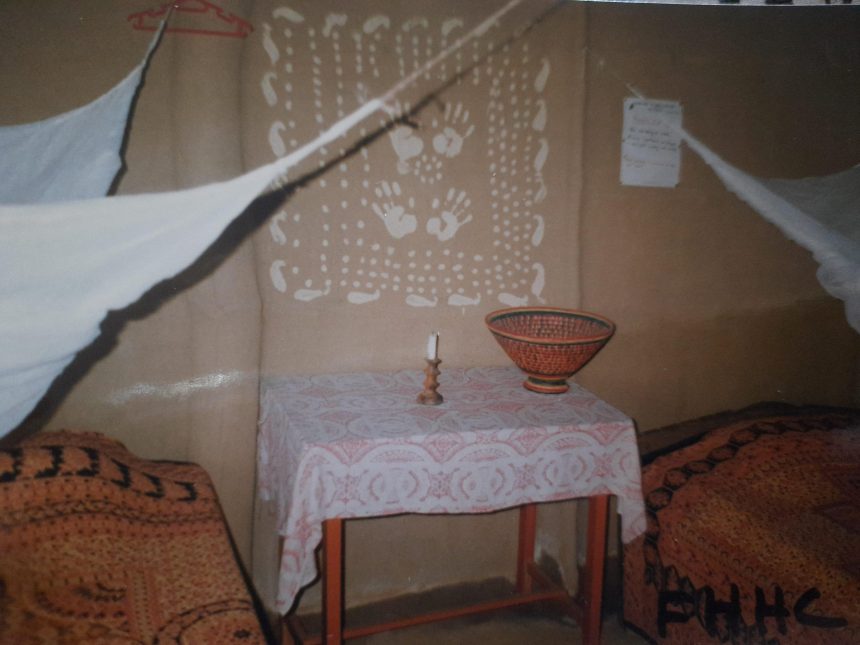
“Having been set up by WWF to protect the environment and culture of the area, Bardiya Community Homestay offers more basic accommodation than many of the private homestays found in Dalla and in Thakurdwara. But this is changing as over the years authentic Tharu homes have disappeared, to be replaced by brick houses, with attached bathrooms,” Sonja Rusticus.

With ICIMOD emphasizing ‘tourism with a purpose’ and homestays providing visitors with a unique experiences, an ‘added value’, does Sonja feel this is something seen in Dalla village? “Overall, I think the homestay model is good – it gives guests more local experience. However, on the down side, there is emphasis now on creating more and more homestays here and throughout the country despite the number of customers not increasing. Also on the minus side, if the coordinator leaves for whatever reason, there is a gap in coordinating to ensure each home gets its turn at hosting guests.”
Auditors’ View
Looking at the Ministry of Culture, Tourism and Civil Aviation Tara Gaon Development Board Kathmandu’s 2020 Report on Impact Evaluation of Homestay in Nepal, it is clear that, for Bardiya Community Homestay at least, domestic customers far outweigh international ones. For example, in 2018 there were 3,785 local customers to 54 international ones, and in 2019 there were 2,897 local customers to 29 international ones. “I would agree. There are hardly any foreign tourists staying in Bardiya Community Homestay. In fact, most of the customers are Nepali students on a field trip who stay for one night only,” Sonja Rusticus. “I
wonder if it is because of the price. Although the majority of the income goes to the host home, with a percentage to the community in general, of course Community Homestay Network has to take their percentage too. This means that staying in a homestay can be more expensive than staying in an average guest house for foreign tourists who are normally staying around three nights or more. Of course, a guest house or hotel is not so focused on the culture.”
I wondered whether the additional income going to homestays has created a situation whereby the owners are now upgrading their mud and bamboo, thatched roof homes to brick buildings which appeals less to foreign visitors. While Sonja feels this to be true, as does Dr. Anu Lama to a certain extent, CHN does not think that modern facilities and buildings detracts from the international visitors’ overall cultural experience.
Interestingly, that 2020 government report gives a 69.9% satisfactory rating (Safety and Security 68%, Governance 60%, Society and Culture 60 %, Environment 80% ) to Bardiya Community Homestay, stating there is stiff competition from newer homestay communities. The report suggests improvement in road access, perhaps the building of a Tharu museum and the incorporation of Tharu dress for culture programs would make it more enjoyable for foreign visitors.
Marianne Heredge, who is an auditor for sustainability for tourism operators in Nepal and India, also agreed with my and Sonja’s thoughts: wondering if there are now too many homestays throughout the country and that numbers should be limited? She too wonders if increased income leads to changes in lifestyle which undermine the ‘traditional’ and will too many homestays in one area lead to each household seeing less customers, leading perhaps to conflict within the community? Time, as they say, will tell.
From Tent to Guest House and Hotel to Homestay
So, there you have it – over these articles on Bardia National Park you have seen the progression in the early 1990s from no accommodation (with the exception of the stunning but expensive Tiger Tops or your own tent), to small guest houses set in paddy fields and with the back drop of the forests and grasslands of Bardia National Park, to larger, more comfortable hotels. And of course, the rise of the homestay which can combine the comfort of a guest house with the homeliness of family life. In areas like Bardia, simply walking through the villages can provide you with a feel for the culture of the area. But staying in a family-run homestay can provide you with a true insight into how locals live. Even if your main reason for going there is to see wild animals, homestays can organize trips into the jungle for you via the larger guest houses and hotels.

Adding Value by Extending Your Trip
Whichever you chose, Bardia National Park is definitely worth visiting – despite it still being a 12 hour road journey from Kathmandu or a relatively expensive flight from Kathmandu to Nepalgunj. If you wish to extend your trip, you can stop off at Lumbini, birthplace of Siddhartha Gautama (who went on to become Buddha) on the way and return via Tansen, Palpa (where CHN have more homestay communities) and on to Pokhara.