Is a Master of Global Affairs at the University of Notre Dame’s Keough School of Global Affairs worth it?
Like any question about our future, it’s one that requires careful consideration. What are your career goals? What kind of impact do you want to make? And how will a graduate degree help you get there?
But one thing’s for sure – this question is best answered by the Keough School’s Master of Global Affairs students and graduates.
Keough School students major in one of three areas that the master’s degree offers: Governance and Policy, International Peace Studies, or Sustainable Development. They’ve put what they learned into practice. They’ve taken part in fieldwork with leading organizations and courses in Washington, D.C. They’ve connected with diplomats, think tank leaders, government officials, and other policy professionals.
So, what is it really like? Below, two students share how the Master of Global Affairs has shaped their academic and professional journeys.
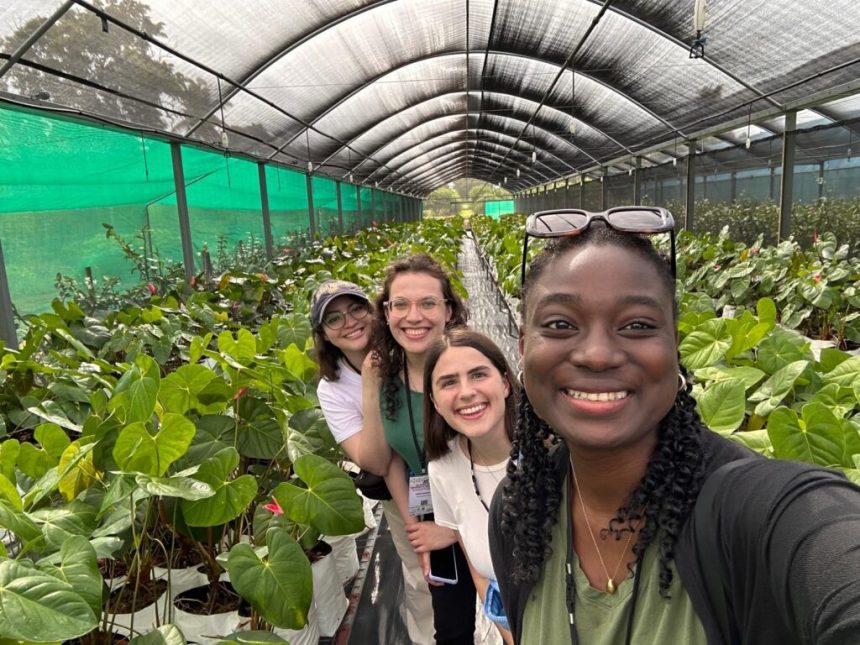
Lauren Elizabeth Serfas may have a background in bioengineering, but her passion has always been international development. That’s what brought her to the Keough School of Global Affairs. Source: University of Notre Dame, Keough School of Global Affairs
Lauren Elizabeth Serfas
Lauren Elizabeth Serfas, from the US, is currently a dual Master of Global Affairs and Master of Business Administration student. After hearing about the Master of Global Affairs from a graduate, she was further drawn to the university as it “offered the ideal environment to connect my personal faith with my professional passion for sustainable development,” she shares.
What makes a Master of Global Affairs degree worth pursuing?
For me, the value of the Master of Global Affairs comes from the combination of rigorous coursework and practical experience. I’ve been able to build technical skills in areas like data analysis while also applying what I’ve learned through fieldwork and projects with real-world partners. Those experiences have helped me better understand what I want to do professionally and given me skills I can carry into my career.
The financial support is another major advantage. All admitted MGA students are considered for generous financial support, including scholarships ranging from partial tuition funding to full-tuition scholarships, as well as stipends for living expenses. Students’ practicum and internship experiences are also fully funded.
Taken together, the academic training, practical experience and financial support have made the MGA a great fit for my goals.
What major did you choose as part of your Master of Global Affairs and why?
I chose the Sustainable Development major because it equips me with the quantitative skills needed to measure the effectiveness of international social enterprises. My interest in this data-driven approach started when I read “Poor Economics” by Abhijit V. Banerjee and Esther Duflo.
I was fascinated by the book’s focus on testing programmes to see what works, rather than guessing what helps people. This major gives me the tools to achieve my long-term career goals in two key ways: it provides the opportunity to build quantitative “hard skills” in data analysis, and it teaches me the technical methods I need to measure a programme’s real-world impact.
What kind of hands-on experience does the Master of Global Affairs offer?
Two hands-on experiences play a large role in my Master of Global Affairs: Regenerating Ecologies and Economies for Livelihoods (REEL), a course through Notre Dame’s Mendoza College of Business, and Consulting and Development. Both have been foundational in providing practical, real-world experience working with local and international partners.
Through the REEL course, my team focused on exploring ways to support the economic sustainability of a cacao cooperative in Peru. For Consulting and Development, we created a marketing playbook and an operational financial spreadsheet for a local real estate agency and a vegan food startup.
These experiences gave me the opportunity to apply what I was learning in the classroom to real projects with local and international partners. They also helped me understand how the skills I was developing could translate into my future career.
What is the academic experience like, and how challenging is the program?
I would describe the Master of Global Affairs as academically rigorous and rewarding. Coming from a bioengineering background, the quantitative classes were more manageable for me, while the large amount of reading and writing posed a bigger challenge. The program pushed me to strengthen skills outside my previous academic background, which has been valuable preparation for my career.
The subject matter also leads to meaningful and sometimes challenging conversations, particularly when discussing conflicts and global issues that have affected members of the community personally. Those conversations are an important part of learning in a diverse cohort.
Students come from a wide range of academic and professional backgrounds, and the professors are incredibly supportive. Even when you are developing skills that are new to you, the coursework is challenging in a way that helps you grow.
What was your field experience like on the ground and did it live up to what was promised?
My field experience with the Integration Lab (i-Lab) in the Pacific lived up to its promise of providing hands-on immersion in global development work. Partnering with the Pacific Farmers Organisation, my team spent two months in Fiji and Tonga interviewing farmers, local organisations, NGOs, and government agencies to find better ways to support smallholders adapting to climate change.
While navigating the intense workload and cultural differences within our team and with our partner was challenging, the experience gave us a rich opportunity to conduct research and draft a policy white paper that will be used by government and funding agencies in the Pacific.
Through this fieldwork, I have gained valuable multicultural teamwork skills and developed technical research methods, such as interviewing, transcribing, coding, and data analysis, that I can directly apply to my future career in sustainable development.
Do you need international work experience to succeed in the Master of Global Affairs?
I would encourage anyone in that position to consider the program. You don’t need to have already worked internationally to get a lot out of the Master of Global Affairs.
What matters most is being curious, willing to listen and open to learning from people with different experiences and perspectives.
Prior experience working with international organizations or cross-cultural teams can certainly be helpful, but the program itself provides opportunities to develop those skills. Through the classroom experience, the i-Lab and other opportunities to work with partners around the world, students can build their confidence working across cultures and gain a deeper understanding of global issues.
What is one thing you know now that is not on the University of Notre Dame’s Keough School of Global Affairs website?
One thing you won’t fully get from the website is how personally invested the faculty and staff are in your success.
Because the cohort size is intentionally kept small, you truly get to know your professors, and they get to know you. They are genuinely committed to helping you grow, whether that means answering questions after class or helping you map out your post-graduation career steps.
The faculty are genuinely excited to teach and highly approachable, and that close engagement creates a supportive community that defines the Keough School.
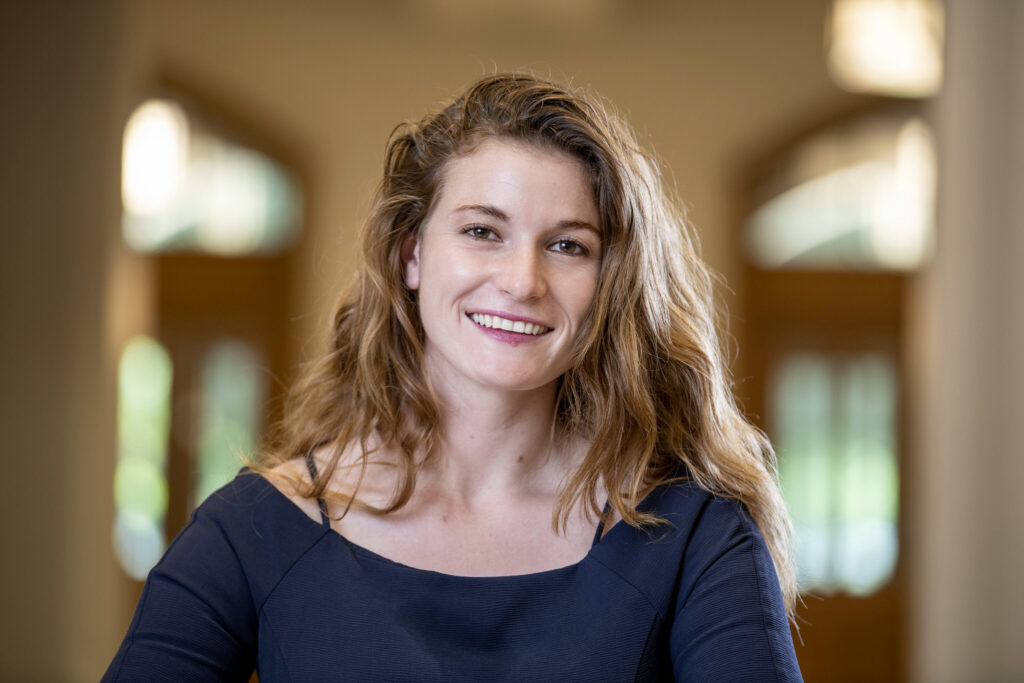
After her service with Peace Corps Ethiopia, Anna Lande received the Coverdell Fellowship and continued her journey at the University of Notre Dame. Source: University of Notre Dame, Keough School of Global Affairs
Anna Lande
Anna Lande from New Mexico graduated from the Master of Global Affairs, specialising in Conflict Transformation, in 2022. She was interested in the programme because “the academic staff featured academic heavyweights and practitioners,” she shares. “They shaped my understanding of how peacebuilding concepts can actively shape policy.”
Looking back, did the Master of Global Affairs help you achieve your career goals?
Absolutely. The Master of Global Affairs was instrumental in helping me prepare for and pursue my career goals. The networks and practical experiences I gained through the program helped me identify pathways into the field and ultimately contributed to my landing my dream job as a Conflict Stabilization Advisor with the State Department’s Bureau of Conflict and Stabilization Operations.
How did your Notre Dame education and the Keough School community help prepare you for your career?
What stood out to me was the combination of academic expertise and practical experience. I was able to learn from faculty and practitioners while also gaining experience through the school’s institutes, networks and experiential learning opportunities.
The work of the Pulte Institute for Global Development and the Kroc Institute’s Peace Accords Matrix also helped connect me to the broader field.
How has the changing global affairs landscape affected your career, and how did Notre Dame help you navigate those changes?
The global affairs field can change quickly, and my own career has required me to adapt to those changes. I was working as a Conflict Stabilisation Advisor with the State Department’s Bureau of Conflict and Stabilisation Operations, where I served as the acting Pacific Islands team lead, when the bureau was terminated as part of the State Department’s 2025 reorganization.
After that transition, I turned to Notre Dame’s Career Center for a resume review and career advice. I was and remain thankful for that resource.
That experience reinforced for me how important it is to build adaptable skills, maintain professional networks and remain open to new opportunities as circumstances change.
How has the Keough School alumni network supported your career?
The Keough School network has been valuable to me professionally. MGA alumni bring experience from across the international development and global affairs fields, and I have appreciated having that broader community to draw on. I intentionally pursued a foreign policy role in the federal government, and the broader Notre Dame community provided connections and perspectives that helped me navigate that career path.
Did the field experience — the i-Lab, the practicum, or your internship — translate into anything concrete in your US career after graduation?
Yes, I provided my first employer with a copy of my i-Lab thesis to demonstrate that I could rigorously conduct programme implementation and MEL (monitoring, evaluation, and learning). I recommend potential master’s candidates consider the value of the i-Lab experience when applying to graduate programmes.
What is one thing you wish you had known before enrolling in the Master of Global Affairs?
The Master of Global Affairs is much broader and more flexible than a traditional international relations degree. The courses and experiential opportunities allow students to develop expertise in areas that align with their interests and career goals.
I would encourage students to take advantage of emerging fields such as political economy, AI and governance, and Geographic Information Systems (GIS) alongside their global affairs training.
Having both global expertise and specialized skills can give you more ways to apply what you’ve learned after graduation.
Follow the Keough School of Global Affairs on Facebook, X, Instagram, YouTube, and LinkedIn