Netanyahu Faces Political Crisis as Election Fraud Allegations Shake Israel
Netanyahu's Election Defeat Sparks Fraud Allegations in Israel

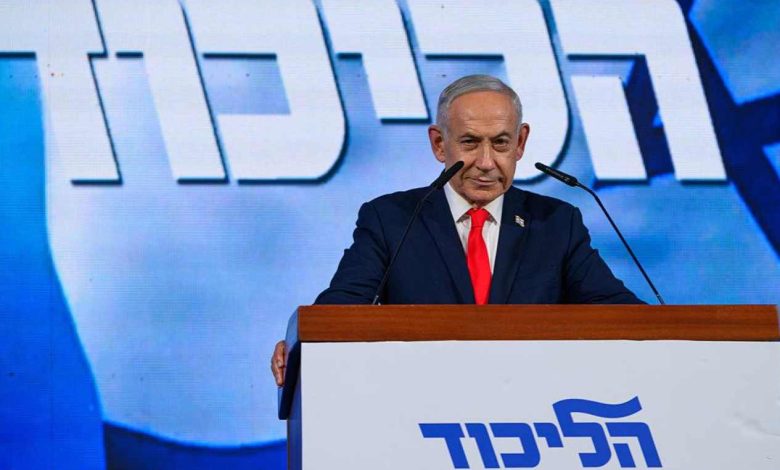
Benjamin Netanyahu’s political bloc has fallen short of a parliamentary majority following Israel’s latest election. His allies are now questioning the results, while election officials maintain that the voting process was conducted properly.
Israel is facing another period of political uncertainty after Prime Minister Benjamin Netanyahu’s governing alliance failed to secure enough seats to maintain its parliamentary majority.
The October 27 election produced a complicated result, leaving neither Netanyahu’s political camp nor the opposition with an outright majority. However, the growing strength of Arab political parties has created a possible path for the opposition to form a government.


Instead of accepting the political setback quietly, Netanyahu and several senior figures within his alliance have raised allegations of electoral wrongdoing, particularly involving Arab political parties.
They have called for investigations into suspected vote-buying, foreign financial influence and possible irregularities at polling stations. Some politicians have even suggested that the election results should be challenged or the voting process repeated.
However, election authorities have rejected claims of widespread electoral fraud, saying there is currently no credible evidence that the overall result was manipulated.
Election results leave Netanyahu struggling to retain power
The latest parliamentary results have significantly weakened Netanyahu’s political position.
His coalition secured 53 seats in Israel’s 120-member Knesset, falling well short of the 61 required to form a majority government.
The opposition bloc led by Gadi Eisenkot won 48 seats. However, the political balance could change considerably if the opposition receives support from two Arab political parties: the Joint List and Raam.
Together, these parties hold 19 seats, potentially giving the opposition a combined total of 67 seats.
Such an arrangement could provide a parliamentary majority capable of removing Netanyahu from office and forming a new government.
The political situation remains complicated, however, because cooperation between Jewish opposition parties and Arab political groups has historically faced considerable resistance.
Arab parties become central to Israel’s political future
The strong performance of Arab political parties has become one of the most significant developments of the election.
Their increased representation could give them considerable influence over negotiations to establish Israel’s next government.
Netanyahu’s political allies have questioned the legitimacy of their electoral gains, raising allegations of financial inducements, external interference and irregularities during voting.
Opposition figures argue that these accusations are politically motivated and designed to weaken the possibility of cooperation between Arab parties and Netanyahu’s opponents.
The dispute has consequently moved beyond the question of election procedures. It has become a wider political confrontation over representation, coalition-building and the role of Arab citizens in Israel’s political system.
Controversy began before polling day
Questions surrounding Arab voting communities emerged even before the election took place.
Netanyahu and Religious Zionist Party leader Bezalel Smotrich announced plans to deploy approximately 2,000 election observers at polling stations in Arab communities.
The stated purpose was to monitor potential irregularities. However, critics viewed the move as an attempt to place particular scrutiny on Arab voters.
Tensions increased on election morning when police arrested three activists associated with the Raam party over allegations involving payments in exchange for votes.
The arrests quickly became a major political issue. Netanyahu’s supporters highlighted the incident as evidence of possible electoral manipulation.
However, subsequent court proceedings did not support all the restrictions requested by investigators, and some suspects were released.
Opposition politicians accused Netanyahu’s campaign of using the arrests to create doubts about the wider election result.
Allegations of foreign interference intensify the dispute
The controversy expanded after Netanyahu’s Likud party announced that it had submitted hundreds of statements alleging bribery, intimidation, violence and document forgery connected to Arab political parties.
Reports in pro-Netanyahu media also raised questions about possible foreign financial support intended to influence Arab voter participation.
Another development followed when a letter from Central Elections Committee chairman Noam Solberg to Shin Bet chief David Zini became public.
The correspondence requested an examination of concerns about possible foreign funding.
However, the committee chairman reportedly acknowledged that he could not independently establish the strength of the allegations.
Nevertheless, several right-wing politicians treated the letter as justification for demanding tougher action against Arab political leaders.
Far-right figures Bezalel Smotrich and Itamar Ben Gvir called for arrests and further investigations. Ben Gvir also alleged that Qatar was involved in efforts to increase Arab voter participation, an accusation Qatar strongly rejected.
These claims have added another layer of tension to an already divided political environment.
Election authorities reject claims of widespread fraud
Despite the growing political pressure, Israel’s election authorities have maintained that the voting process was legitimate.
The Central Elections Committee dismissed allegations of widespread fraud, stating that there was insufficient evidence to suggest systematic interference with the election.
In a joint public appearance, the committee chairman, the head of the Shin Bet and the attorney-general also sought to reassure the public about the integrity of the process.
Officials indicated that even if questions about foreign financial activity were eventually substantiated, this would not automatically invalidate the election results.
Their position was clear: the outcome of the democratic voting process must be respected.
The statement, however, did little to end the political dispute. Likud continued to argue that serious concerns remained surrounding the election.
Opposition accuses Netanyahu of undermining the results
Opposition leaders have strongly criticised the prime minister’s response to the election outcome.
Gadi Eisenkot described the allegations as a deliberate attempt to damage the credibility of the opposition’s potential parliamentary majority.
Other opposition politicians argued that questioning election results without convincing evidence could weaken public confidence in democratic institutions.
The Joint List and Raam have also defended their electoral performance, insisting that their parliamentary representation reflects the choices of voters.
For Arab political representatives, the controversy is not simply about election results. They argue that attempts to portray their political success as illegitimate undermine the democratic rights of Arab citizens.
What happens next for Netanyahu?
Israel now faces a difficult period of political negotiations.
Netanyahu’s reduced parliamentary strength leaves him with limited options, while the opposition has a potential route to power through cooperation with Arab parties.
However, securing a majority on paper does not guarantee that a stable government can be formed. Differences between political groups, ideological disagreements and questions about coalition priorities could complicate negotiations.
The coming weeks will therefore be critical in determining whether Netanyahu can retain power or whether Israel will see another change in leadership.
The wider concern is the growing political division surrounding the election itself.
At the centre of the dispute is a fundamental democratic question: can an election result be accepted when the outcome threatens the position of an established political leader?
For Israel, the answer could shape not only the next government but also public confidence in its democratic institutions.
Post of Day | International Politics | Middle East