Far from the high peaks of the Himalayan mountains lies a wilderness where sal trees grow beneath the glare of a subtropical sun; where boldly striped tigers slip like ghosts between the trunks of broadleaf forests; where armor-plated one-horned rhinos pursue the age-old rhythms of life amongst great flocks of drongos and minivets, and where a different kind of wilderness experience is found through elephant-based tourism.
This is one of the last strongholds of the endangered Asian elephant, and it’s also a place where wildlife enthusiasts can hitch a ride atop their backs to pass unmolested through the forest—getting up close and personal with the wild animals they’ve traveled so far to see. This is the Chitwan National Park, and it’s a place where elephant-based tourism continues to thrive.
This paints an evocative picture, to be sure, but those of you who know anything about elephants can probably guess what I’m about to say next. There are serious ethical concerns with the conscription of elephants into the tourist trade. The docile animals you may have seen on your last visit to Chitwan National Park are not voluntary participants in the industry—and that’s a problem. The taming of wild elephants involves a cruel and difficult “breaking” process, which starts at a young age and continues throughout the animals’ entire lives. Elephants are overworked, underfed, physically restrained, confined, and made to perform any number of unnatural behaviors. This is a vicious cycle of exploitation, especially for intelligent and sensitive animals with complex social lives—but what can be done about it?

Improving Outcomes for Captive Elephants in Nepal
“Awareness is the key,” says Floriane Blot, Lead Coordinator of Nepal’s Stand Up 4 Elephants sanctuary, which is situated near Chitwan. She’s also the president of the organization’s Belgium-based headquarters, and she’s seen firsthand how education plays a role in changing how elephants are treated. “We find that once people understand the bigger picture, they are far less inclined to participate in forced-contact activities.”
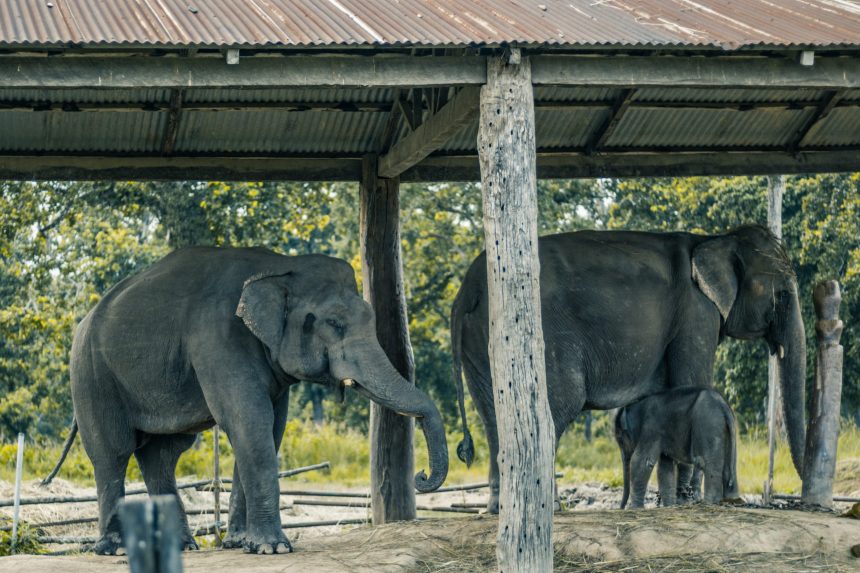
Guests are welcome at the sanctuary, which is free to visit and represents the only genuine elephant sanctuary in the country. There, they have the opportunity to respectfully observe the two elephants who currently call this refuge home: Eva and Lhamo, both rescued from lives of abuse and neglect in the tourism trade. At the sanctuary, the elephants get shelter, medical care, and daily attention from salaried staff dedicated to their well-being. Guests also learn about the history and traditions of mahouts, or elephant handlers. Unfortunately, mahouts have historically been relegated to the lowest tier of Nepal’s traditional caste system, and many people working as elephant handlers face their own crises of abuse and neglect.
Accordingly, Stand Up 4 Elephants, or SU4E, also works to better conditions for both captive elephants and their keepers in the wider Sauraha area of the Chitwan Valley. The organization goes into the community to provide supplemental food, vitamins, clothing, and other basic necessities. This wasn’t always easy work. “As foreigners living and working in Nepal, we first had to build credibility among locals,” explains Blot. But once they’ve established trust in the community, the SU4E crew makes a point to offer guidance on more ethical elephant handling practices. In this way, the organization is hard at work to improve outcomes for both elephants and people in the region.

How Can You Help Elephants?
So what’s the end goal of all this work? Ultimately, the organization would like to see all tourism operators transition to hands-off, observation-based activities with elephants. But there’s still plenty of work to be done in the meantime—and travelers can do their part, too. For one thing, tourists should avoid all elephant-riding activities, and they should approach any interaction-based tourism with serious caution. Some for-profit companies offer visitors the chance to touch and bathe elephants using misleading claims that the elephants are “rescued,” while in fact they’re still coerced into performing for tourists. This can be tricky to navigate, and SU4E recommends that travelers thoroughly research and question any such claims. Consider asking yourself some of the following questions:
- Where do this company’s elephants come from?
- Are the elephants chained or confined?
- Are the elephants forced to interact with people?
- Is this a for-profit organization?
By reviewing company credentials and consulting endorsements from reputable conservation groups, compassionate travelers can also learn more about the activities they plan to undertake. And suppose conditions in the community can be improved, and travelers can be steered away from unethical tourism operations. In that case, there’s hope that captive elephants of Nepal might enjoy a brighter future. This is the only way to push for genuine, meaningful change in the industry—and it’ll benefit both elephants and the people who have long depended on them for their livelihoods. “Some changes simply take time and cannot be rushed,” Blot says. In the meantime, each of us can do our part to make a difference.
Government-Owned Elephants in the Chitwan National Park
But what about legitimate conservation enterprises? The Chitwan National Park has something of a unique history when it comes to elephants. Staff here relied heavily upon elephant-back patrols to establish the park, and they continue to use elephants to conduct census activities and to mount anti-poaching patrols in the inaccessible reaches of its seasonally flooded jungles. By some accounts, Nepal’s greater one-horned rhinoceros population may even owe its continued existence to the diligence of these patrols. But Floriane Blot makes a salient point when she reminds us that modern technology offers a host of alternative tools for conservation purposes: drones, camera traps, and motor vehicles. “It is contradictory to exploit one endangered species to protect another,” she says.
To learn more about how these endangered elephants are used for conservation purposes within the confines of the park today, I spoke with Dr. Michelle Szydlowski, a researcher at Miami University who has spent years working with elephants and their mahouts in Nepal. With her comprehensive field experience and impressive resume of peer-reviewed publications exploring the human-elephant relationship here, she sits comfortably among the world’s foremost experts on the elephants of Chitwan National Park.
“There are miles to go about elephant care,” she explains. Government-owned elephants indeed enjoy greater access to freshly cut grass, and they live in stables where they can see, smell, and sometimes touch other elephants. These animals require a robust social life, and this critical contact with their own kind is something that many privately owned elephants simply don’t have. But serious health concerns have also arisen amongst the government-owned elephants of Chitwan. Because these animals are often underfed and overworked, their immune systems struggle to combat common diseases—and they’ve even spread ailments like tuberculosis to both wild elephants and rhinos.
This is because many modern-day government mahouts just don’t have the experience they need to care for captive elephants. “The traditional knowledge has been lost or interrupted,” says Szydlowski, “and young men with little training or knowledge are left in charge.” This is where important organizations like SU4E come into play. By supporting mahouts and their families from marginalized communities, these groups can begin to overhaul both elephant care and mahout training in Nepal.
But that’s not to say that Western scientists or foreign charities always know best—in some cases, foreign activists have actually harmed both elephants and their own cause, particularly in discussions surrounding elephant-based tourism. For her part, Szydlowski includes local Nepalese in each step of her work, relying on their own knowledge, sharing information with them, and telling their stories in her scholarly publications and advocacy work. It’s in this spirit of cooperation that the future of elephants and their mahouts can be found.

Recommendations for Ethical Tourism in Chitwan National Park
So what can we take away from this moral dilemma? Is it better to avoid the question altogether and to strike the Chitwan National Park from your own travel itinerary? Quite the contrary! “Please do visit the national park,” Szydlowski says. And while you’re there, take a few concrete steps to minimize the risk of accidentally harming the animals you’ve come to see. Szydlowski offers some simple recommendations that anyone can follow:
- Choose a locally owned travel agency and book local accommodations.
- Consider homestay accommodations rather than expensive resorts owned by non-residents who may not share their revenue with communities in the area.
- Use local guides trained and certified by the government.
- Take a hike instead of a vehicle-based safari — and take a multi-day hike if you can!
- Avoid any tourism offices that offer elephant rides, and avoid any hotels that actually own their own elephants.
It’s important to remember that we always have an impact on the things we travel the world to see, and it’s our responsibility to do them no harm. This is especially true when we’ve come to see intelligent, sentient animals like the elephants of Nepal, and the crucial conversation around elephant-based tourism.